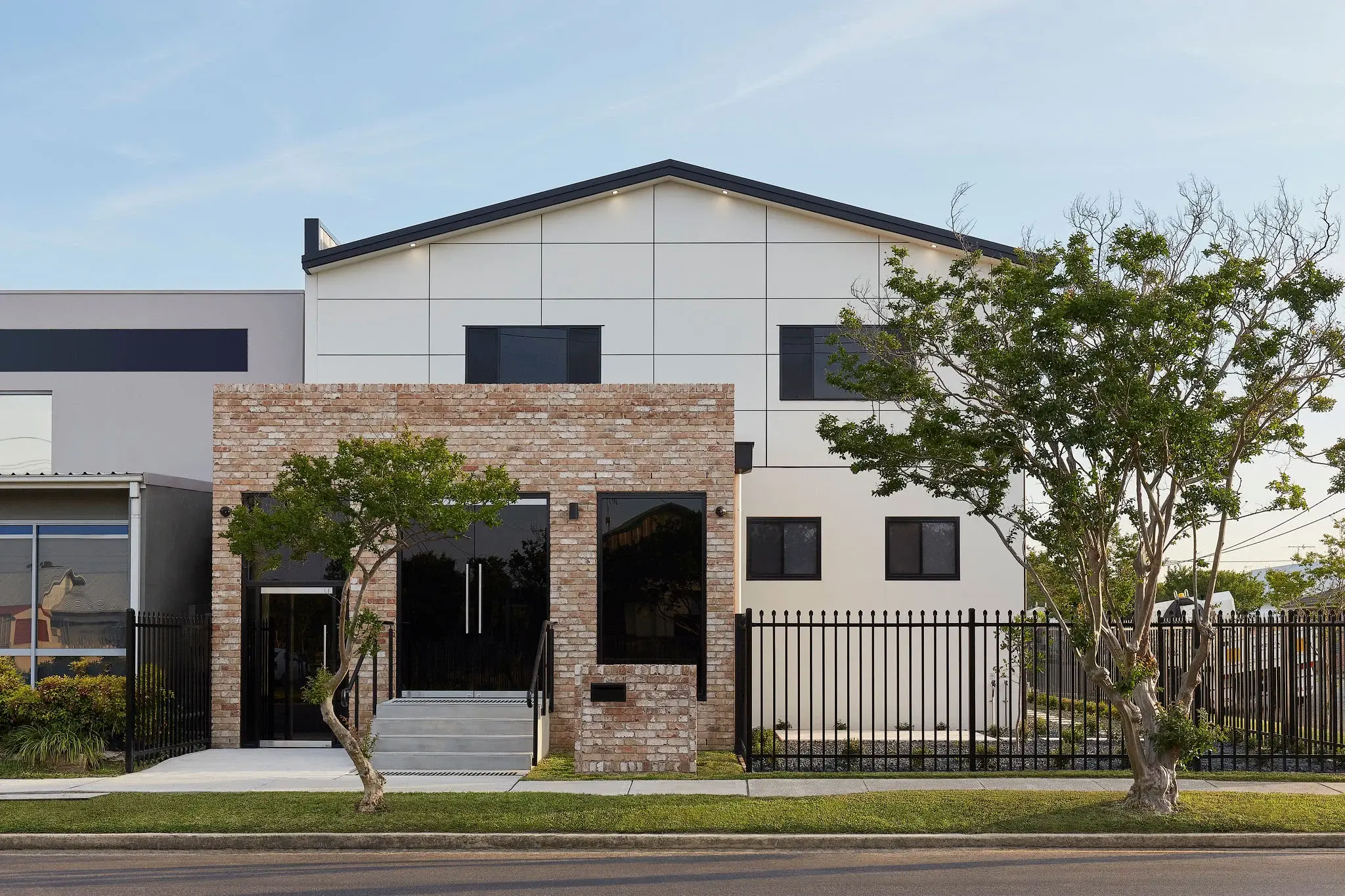
Granny Flat and Secondary Dwelling Design - Newcastle and the Hunter
The first question on most secondary dwelling and granny flat projects is whether the works can proceed as Complying Development or require a Development Application through council. That depends on the site, the zoning, the applicable council controls, and the proposed design, and the right answer is established through a site-specific assessment, not assumed from the project type. Buildingwise Developments prepares secondary dwelling design documentation across Newcastle, Lake Macquarie, Maitland, and the Hunter, with in-house building surveying knowledge applied throughout the process.
What Is a Secondary Dwelling?
A secondary dwelling is a self-contained dwelling built on the same lot as an existing home. Most people know them as granny flats, though the category also includes detached studios, self-contained units built over garages, and other structures designed for independent occupation alongside the primary residence.
Secondary dwellings are one of the most common residential projects across Newcastle, Lake Macquarie, Maitland, Port Stephens, and the broader Hunter region. Some are built for family members who want to be nearby but retain their own space. Others generate rental income from a larger block. Some simply make better use of land that would otherwise sit underutilised.
Whatever the purpose, the process is the same: a design that needs to meet the right approval requirements for the site, result in something a builder can price and construct accurately, and hold up through every compliance stage that follows lodgement.
Granny Flats, Studios, and Detached Secondary Dwellings
Under NSW planning law, a secondary dwelling is a self-contained dwelling on the same lot as a principal dwelling. It must have its own kitchen, bathroom, and living areas. The structure can be attached to the main home, built as a standalone structure elsewhere on the block, or possibly incorporated into an existing garage or outbuilding where the site, BCA and council controls allow.
The design involves the same considerations as any other residential project: site constraints, setback requirements, the relationship between the secondary dwelling and the existing home, and Building Code of Australia requirements that may apply across both structures on the allotment.
How the Housing SEPP Applies in NSW
The State Environmental Planning Policy (Housing) 2021 provides the planning framework for secondary dwellings across NSW. Under this policy, secondary dwellings that meet certain design and site criteria may be approved as Complying Development, which is generally a faster pathway than a Development Application through council.
Whether the Housing SEPP applies to a given property, and whether the proposed secondary dwelling satisfies the criteria for Complying Development, depends on the site's zoning, the applicable council controls, and the specific design. Those criteria are not the same on every site. An enquiry is the right starting point for a site-specific assessment.
What Approval Pathway Applies?
Development Application (DA)
A Development Application is assessed by council. For secondary dwellings, a DA is required where the proposed structure does not meet the Complying Development criteria under the State Environmental Planning Polices (SEPP), where the site is in a zone that does not permit CDC, or where the council's local environmental plan sets controls that limit or override the SEPP provisions.
After the DA for a secondary dwelling is approved, CC plans and documentation will need to be created and submitted to a Certifier for approval before construction work can begin.
Complying Development (CDC)
Where a secondary dwelling meets the relevant criteria under the SEPP, it may be approved through the Complying Development Certificate pathway. This pathway can be faster, though it is conditional on the proposed design and site meeting all the applicable criteria. A CDC does not reduce the BCA compliance or approval documentation required; it is simply assessed and approved in a faster timeframe.
A faster approval pathway does not reduce the BCA compliance requirements that apply to the build itself. More on Complying Development Certificate documentation →
Why the Pathway Depends on Your Site, Not Just Your Project
The same secondary dwelling design may proceed as Complying Development on one property and require a Development Application on a neighbouring site with different zoning, lot size, or council controls. The right pathway for your site is confirmed through a site-specific assessment, not assumed from the project type.
Buildingwise Developments can assess which pathway applies and prepare documentation accordingly. An enquiry is the right starting point.
What Buildingwise Developments Prepares
Design Documentation
Full design documentation for secondary dwelling projects across Newcastle and the Hunter region. That includes floor plans, elevations, site plans, and any additional drawings required for the relevant approval pathway. The design accounts for the relationship between the secondary dwelling and the existing home, site constraints, applicable council controls, and BCA requirements across the whole allotment.
Compliance and BCA Review Built into the Process
At each design stage, every project is reviewed by registered building surveyors and a licensed builder. Not as a final check before lodgement. Throughout the process, from the first sketch to the completed drawing set.
That review is particularly relevant on secondary dwelling projects, where BCA requirements interact with the existing structure on the site in ways that are not always obvious at the outset. Issues identified at the design stage cost almost nothing to resolve. Issues caught during or after construction are significantly more expensive.
Coordinating with Certifiers and Engineers
Buildingwise Developments coordinates with private certifiers and engineers through the approval process. Where structural assessment, footing design, or connection to services requires engineering input, that is arranged as part of the project coordination.
What You Should Know Before You Start
Secondary dwelling eligibility and design limits are site-specific. Common questions at this stage include: what the minimum lot size requirements are for the relevant council area, what setbacks apply, whether easements or drainage constraints affect the buildable area, and whether the primary dwelling meets current standards in ways that become relevant when a secondary dwelling triggers a BCA assessment across both structures.
If you are not sure what your block allows or which approval pathway applies, an enquiry is the right first step. That conversation can clarify the site constraints and likely scope before any design direction is committed.
Common Questions
Do I need approval for a granny flat or secondary dwelling?
You will need approval for any new structure. Even smaller structures may require approval depending on their size and placement on the property. Whether the approval takes the form of a Complying Development Certificate (CDC) or a Development Application (DA) and Construction Certificate (CC) depends on the property, the proposed design, and the applicable council controls. An enquiry is the fastest way to find out which pathway applies to your site.
What can I build on my block?
That depends on the zoning, the applicable council controls, the lot size, and the existing structures on the property. The SEPP Codes set out criteria for secondary dwellings across NSW, but those criteria interact with council local environmental plans and development control plans in ways that vary between sites. The right answer for your block is established through a site-specific assessment, not from the SEPP alone.
Can I rent out a secondary dwelling?
In most cases, yes. Secondary dwellings in NSW can generally be used as rental accommodation. There may be conditions attached to the specific approval, and where the property forms part of a strata scheme, the strata by-laws may affect what is permitted. If rental income is part of the purpose of the secondary dwelling, raise that at the enquiry stage so the documentation and approval pathway can be prepared with that use in mind.
Where We Work
Buildingwise Developments prepares secondary dwelling and granny flat design documentation across Newcastle, Lake Macquarie, Maitland, Port Stephens, Dungog, Singleton, and the broader Hunter region.
For the right project, work extends across broader NSW.
Start Your Secondary Dwelling Project Today ...
Tell us about what you are planning. An enquiry gives us enough information to have a real conversation about your project, the right approval pathway, and what the process will look like.
We'd love to hear about your project and let you know how we can help!
Call us on: 02 4957 8187 or click one of the buttons below ...